Speakers

Overview
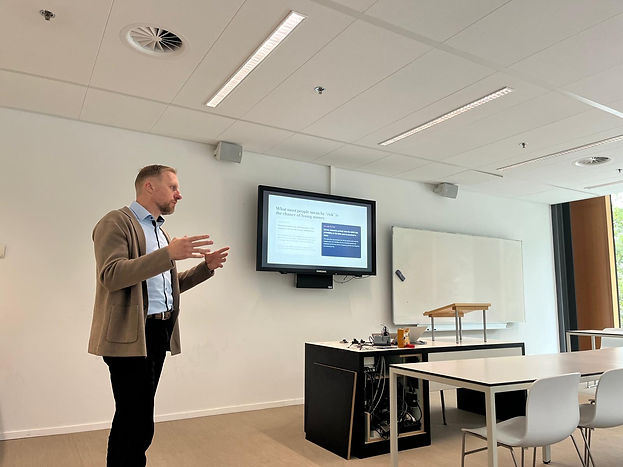
We have to regularly make decisions about the future. Think, for instance, about your pension savings, investments, insurance, or saving for your dream holiday. But how do we make well-informed decisions with our biased time preferences in the background? In this session we discussed about the present bias, in which people favour a monetary payout today over a payout in the future. This bias actually influences our pension choices. In this situation, what is the responsibility of pension funds in protecting individuals from making biased decisions according to their own preferences? Increased individualization of society puts the seemingly necessary protection of individual’s future decisions under pressure. In addition, we discussed how the time span about which we have to make a decision impacts how risky we perceive our choice to be. Importantly, decisions about the future sometimes seem more risky than they actually are, which leads to aversion towards these types of choices. Integration between economic models and psychological knowledge on human biases could potentially strengthen this relationship between individuals time preferences and long-term choices, which could eventually inform policy design to guide individuals in making more well-informed choices.
Key Points
Our time preferences influence our financial choices about the future.
In addition, a well documented phenomenon is people's risk preferences: often, we find it difficult to approach risk and we focus primarily on the chance of losing, and not on the actual amount we could lose. This biases our choices.
People with a stronger present bias experience a higher effort to make decisions about the future. This makes them more likely to choose the default pension option with the standard retirement age and flat annuity, even though there is an option to choose your own payout profile in the Netherlands.
Pension and investment professionals have more experience with making impactful decisions over long time periods and therefore also show to be less present biased than the public. Interestingly, they are simultaneously well-aware of the public being present-biased.
People take more risk in decisions that span longer time horizons. Due to easy access nowadays to trade markets and short-term framing, there has been a shift from longer investment to even daily trades. So people are guided towards more short-term behaviour, which leads to worse decisions.
Open question: What information should pension and investment funds provide to people about their pension outcomes and how does this influence their time and risk preferences, which are highly influenced by the length of the time horizon and therefore also by their age?
Next Steps
Possible collaborations: the influence of time on our decisions is not only modified by our preferences, but also by how we perceive time. Potential future steps would be to combine this knowledge on how individuals differ in perceiving time with how they differ in their time preferences. Moreover, new tools, such as a trade simulator, could be developed and tested to help people making better-informed decisions about their investments.
If you are interested in future decision-making and would like to connect with the speakers or suggest a speaker for another session, contact us at centerfordecisionscience@ru.nl.